
Dry cleaning
We clean suits and delicate garments.
COAT CLEANING
We clean wool, cashmere and lined coats in the closed-loop Realstar SYSTEMK4.
The work we do.
Our courier collects your item. We check the material, stains and damage at our workshop. We choose a suitable method and explain the chances of stain removal and any risks. We confirm the final price after inspection.
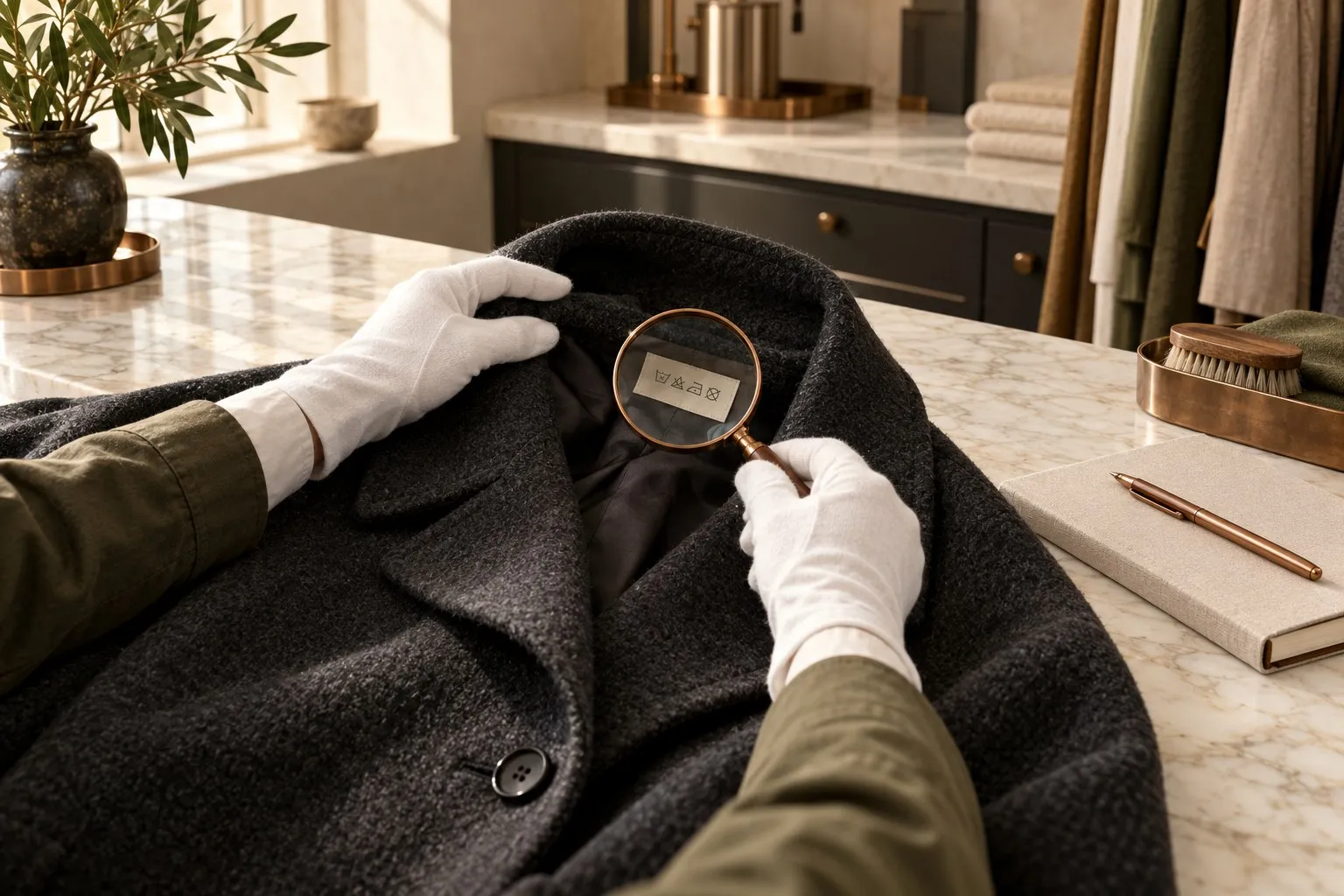
We check the fibre, lining, shoulder pads and label, and test the colour on a hidden seam. We note where the pilling and shine are, identify oil, protein, tannin and pigment stains and treat them locally with SEITZ and BÜFA products.

Wool and cashmere shrink in water, so we work in the Realstar SYSTEMK4 with halogen-free Kreussler SOLVONK4 solvent. Mechanical action and cycle length are set to suit the fabric, and after each cycle we filter and distil the solvent.

We take the bobbles off the surface and lay the nap in one direction. On PONY and Ghidini equipment we rebuild the shoulder, collar, lapel and pocket-flap lines with steam and air, then pack the coat after a final check.
Wool and cashmere shrink and stiffen when washed in water. We clean coats with solvent in a closed loop instead, so the size and shape stay. If the label calls for wet cleaning, we choose a low-temperature programme in the PURUS to suit the fabric.
We remove the bobbles from the surface and the coat looks noticeably smoother. But pilling is fibre wear: a worn area can bobble again. The collar, underarms and the line where a bag strap rubs come back fastest.
Shine appears when an iron or friction flattens the fibre. We lift the nap with steam and a brush and reduce the shine noticeably. Where the fibre is crushed and broken, the mark does not go completely — we tell you before we start.
We do not start cleaning with a torn lining — the tear grows in the cycle. Our tailor repairs it first and we clean afterwards. The repair is quoted separately at intake.
Cleaning removes moth larvae and eggs — the most important step before storage. A hole can be closed by our tailor; the result depends on the weave, so we show you what is possible before starting.
Salt carried by melted snow leaves a white line along the hem; fresh marks come out. Salt left for a long time bleaches the colour and a difference can remain there. It shows sooner on black and dark coats, so it is better not to leave the stain.
The best time is the end of the season, March-April: a cleaned coat is protected from moths, does not smell or yellow, and is ready to wear next winter. In October-November orders pile up and the turnaround stretches. All four branches accept coats: 28 May (Kövkəb Səfərəliyeva 19A), Nərimanov (Əlicabbar Orucəliyev 126), Ağ Şəhər (Süleyman Vəzirov 28c/1) and Elmlər (Fətəli Xan Xoyski 14). 28 May, Nərimanov and Elmlər open Mon-Sat 10:00-19:00 and Sunday 12:00-18:00; Ağ Şəhər opens daily 10:00-22:00. Our courier can collect and return it too — *3338 or +994 55 433 33 38.
We clean suits and delicate garments.

Water-based care to suit the fabric
We clean down and membrane jackets.