
Dry cleaning
We clean suits and delicate garments.
WEDDING DRESS CLEANING
We treat tulle, lace and beaded trim each in its own way.
The work we do.
Our courier collects your item. We check the material, stains and damage at our workshop. We choose a suitable method and explain the chances of stain removal and any risks. We confirm the final price after inspection.
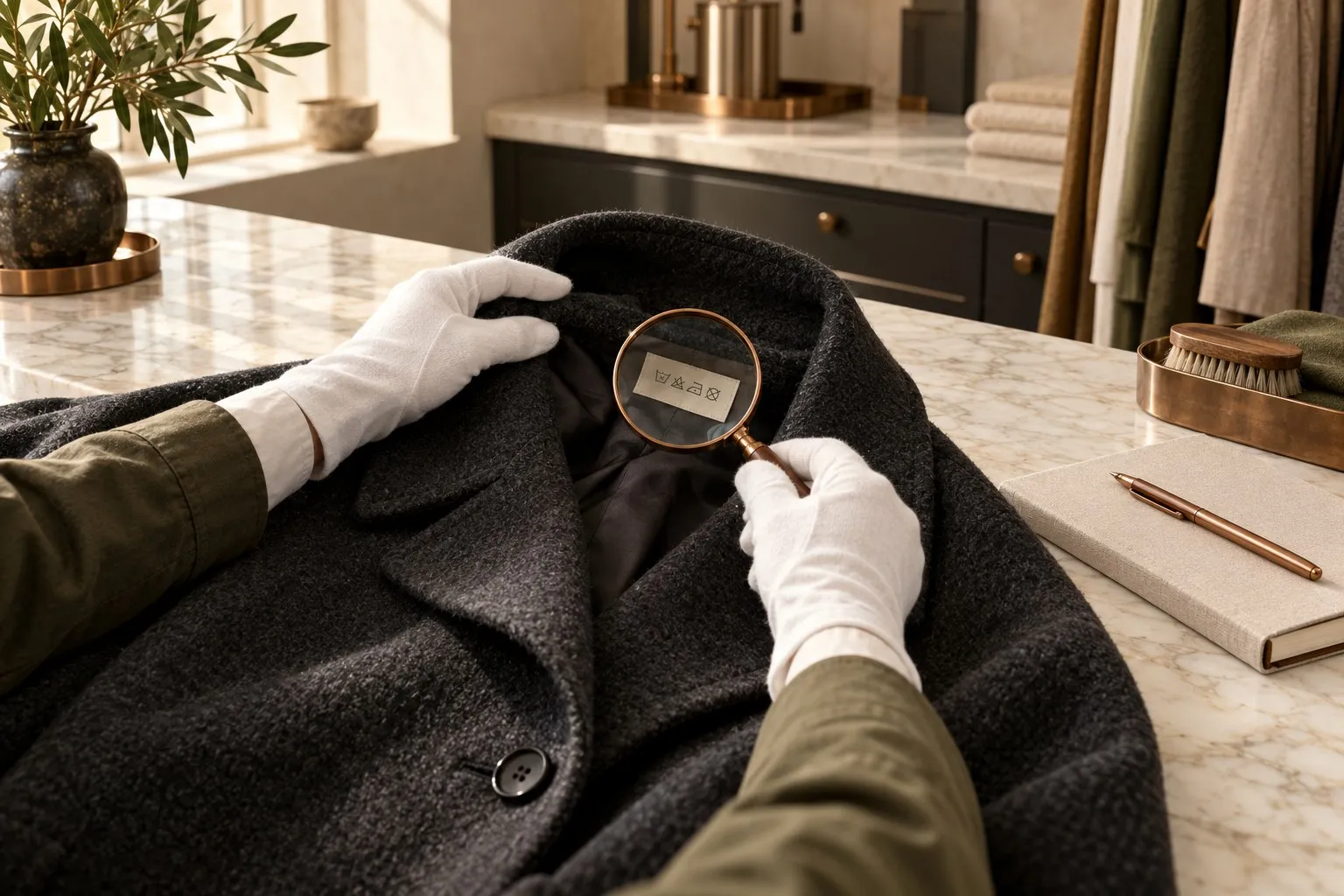
We hang the dress and open out every layer: outer fabric, lining, tulle layers, train and corset are each checked separately. We establish whether the trim is sewn or glued, check hooks and zip, and test colourfastness on a hidden seam. Stains are logged by location — hem edge, waist, underarms, neckline — because each zone is treated with a different product.
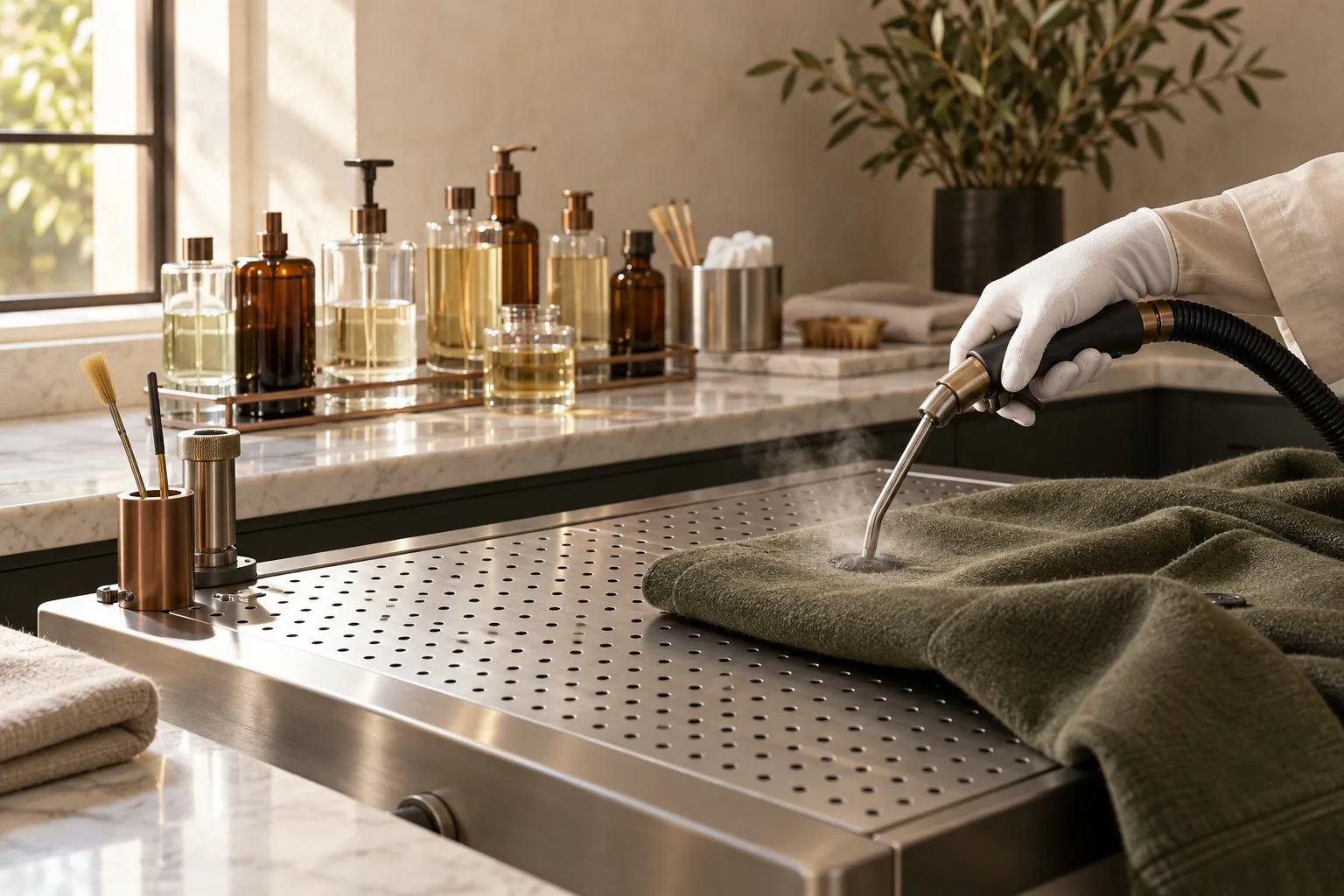
We work on a spotting table with steam, air and vacuum. Champagne and dessert marks (sugar), sweat and make-up (protein and oil), soil and grass along the hem — each gets its own product from the SEITZ and BÜFA ranges. We never apply heat to a sugar stain, because heat bakes it into the fabric. Every product is tested on a hidden area first.

The method follows the fabric and trim: a dress that tolerates solvent is cleaned in the closed-loop Realstar SYSTEMK4 with Kreussler SOLVONK4, while one that needs water-based care goes through the wet-cleaning line with dosed products. A dress with glued trim never goes into a cycle — it is handled entirely by hand. Finally we open out the skirt layers with steam and air on a PONY finisher and return the dress in a breathable cover.
As soon as you can — within a week or two. Champagne, dessert and sweat leave no visible mark on the first day, but they stay in the fabric and oxidise in air; a few months later a yellow stain appears in the same place. If the dress has been waiting since the wedding night, bring it anyway — we will assess what is possible together at intake.
A yellow stain is not the dirt itself but the oxidation of sugar and sweat left in the fabric. Fresh oxidation usually lightens; a stain that has sat for years lightens too but may not disappear, and sometimes the fibre itself is damaged. At inspection we say plainly what is realistic — we will not promise removal we cannot stand behind.
Yes, but it depends on how the trim is fixed. Sewn beads, sequins and embroidery survive a cycle. Glued trim can lift in solvent — such a dress is handled entirely by hand instead. Lace and tulle layers are worked separately with minimal mechanical action. We tell you which route we have chosen at intake.
Yes. Cleaning is usually unnecessary before the day; we release the creases the dress has picked up in its box or on the hanger with steam and air on a PONY finisher and reshape the skirt layers. This takes less time than cleaning, but a full skirt still needs time — tell us the date in advance so we can have it ready.
Three rules: store it clean, keep it away from plastic, and take the weight off the shoulder. A soiled dress yellows. A plastic bag traps moisture. A heavy skirt left hanging pulls on the shoulder seam. The safest option is folded storage in a breathable cover, somewhere dry and dark.
A wedding dress takes longer than an everyday garment because most of the work is done by hand: zone-by-zone treatment, the hem edge, checking the trim, then steaming and shaping. The time depends on the dress’s volume, its trim and the state of the stains. We give you a ready date at intake and let you know when it is done; you can also follow progress on the Track order page.
All four branches accept dresses: 28 May (Kövkəb Səfərəliyeva 19A), Nərimanov (Əlicabbar Orucəliyev 126), Ağ Şəhər (Süleyman Vəzirov 28c/1) and Elmlər (Fətəli Xan Xoyski 14). 28 May, Nərimanov and Elmlər open Mon-Sat 10:00-19:00 and Sunday 12:00-18:00; Ağ Şəhər opens daily 10:00-22:00. It is best to bring the dress on a hanger and in a cover. If a full skirt is hard to fit in a car, our courier collects and returns it — *3338 or +994 55 433 33 38.
We clean suits and delicate garments.

Water-based care to suit the fabric
We clean down and membrane jackets.