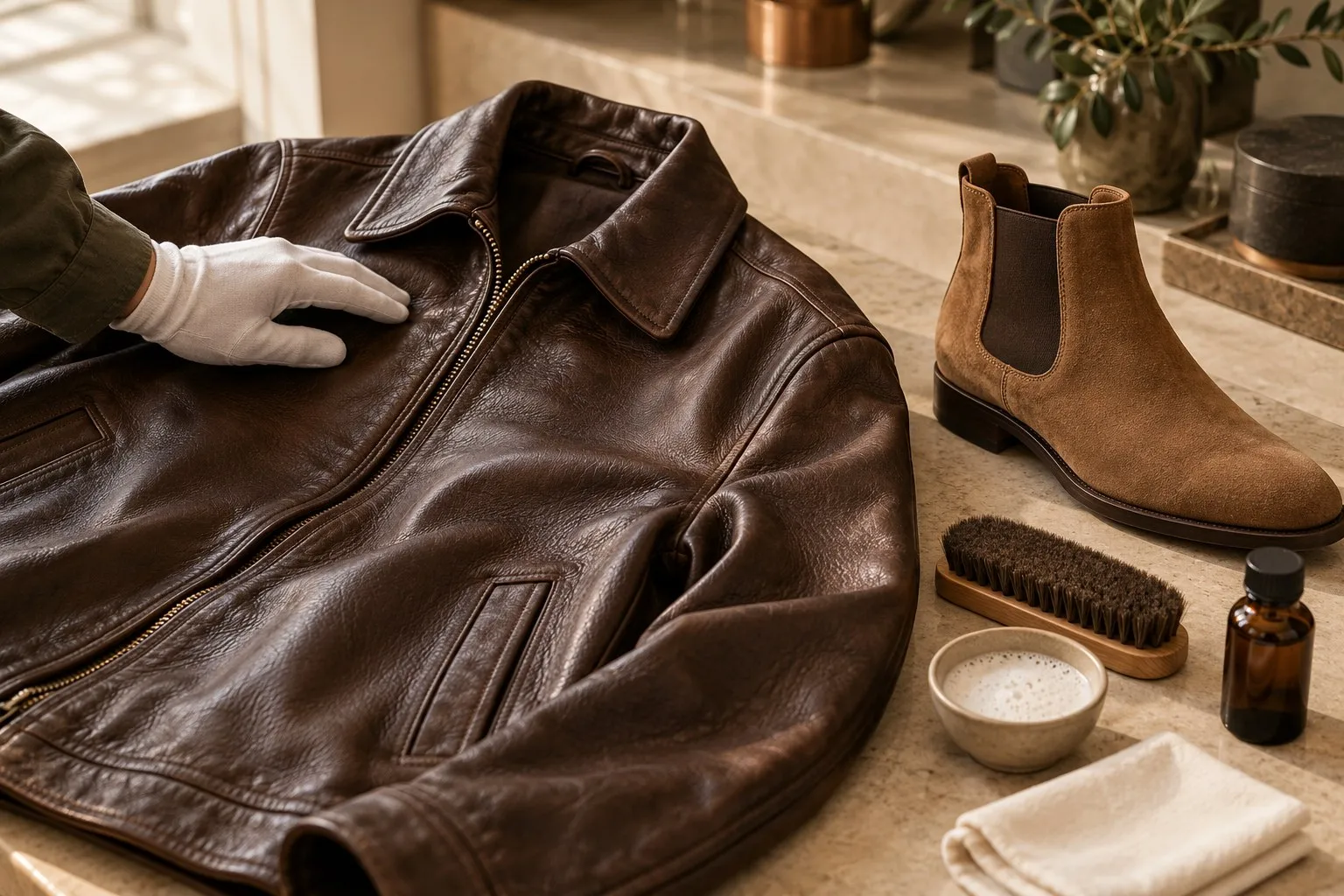
Leather and suede care
Cleaning and colour restoration
SHEEPSKIN AND FUR
We never leave the hide dry, and we lift flattened pile back up.
The work we do.
Our courier collects your item. We check the material, stains and damage at our workshop. We choose a suitable method and explain the chances of stain removal and any risks. We confirm the final price after inspection.
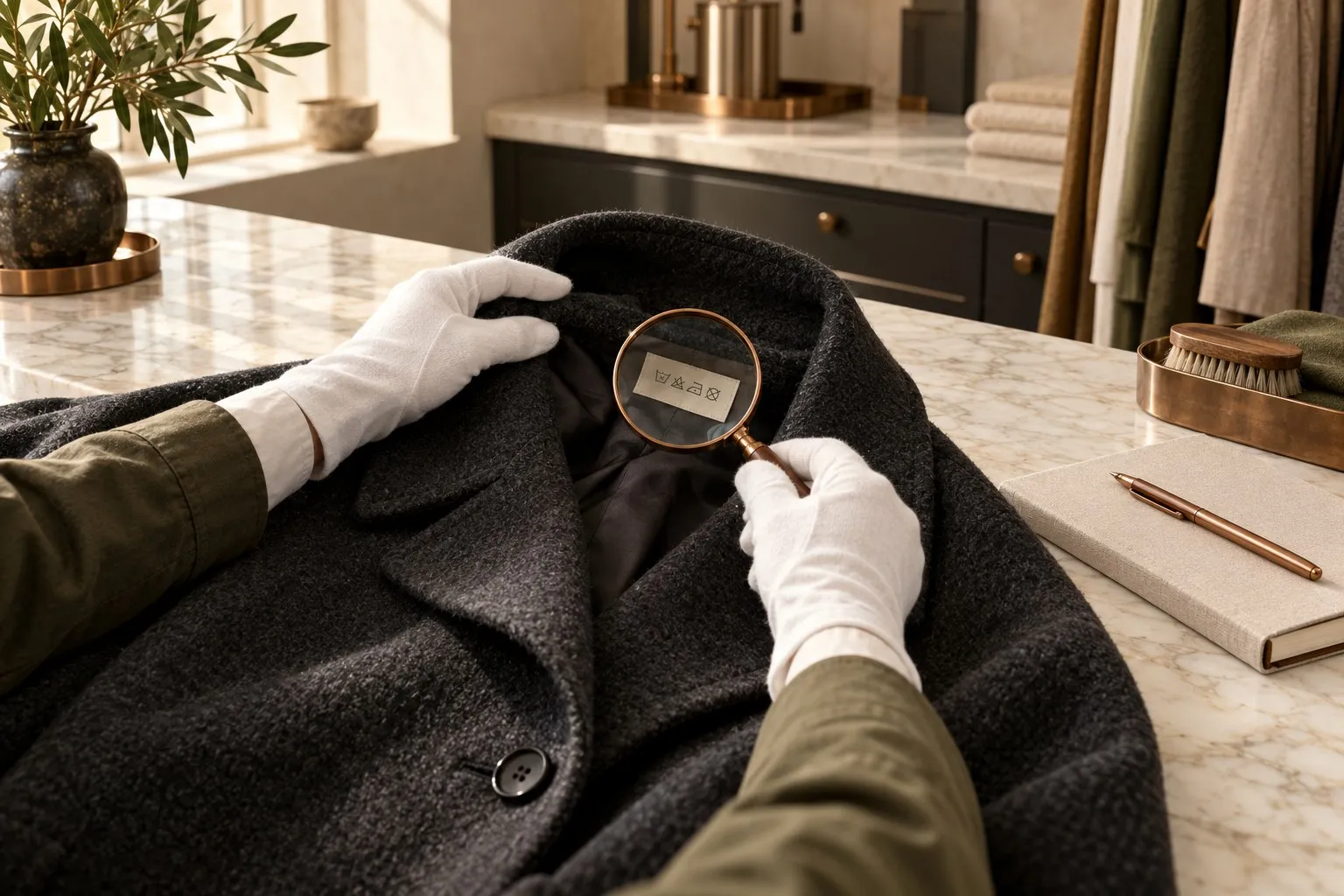
We identify the hide, whether the fur is natural or faux, and check the lining and label. We test the product in a hidden area and note stains, rub marks and seams, then write on the receipt what each part will get.
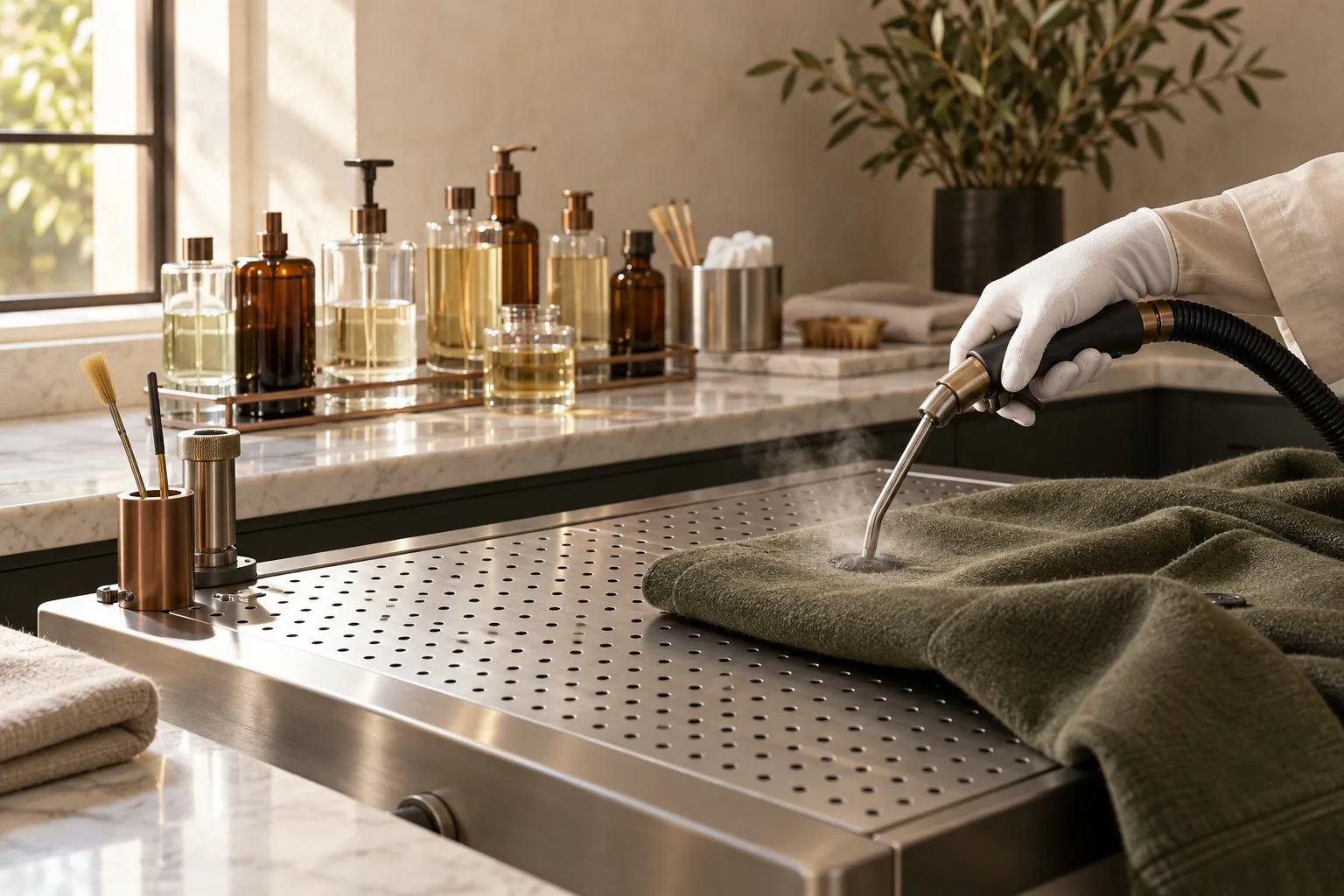
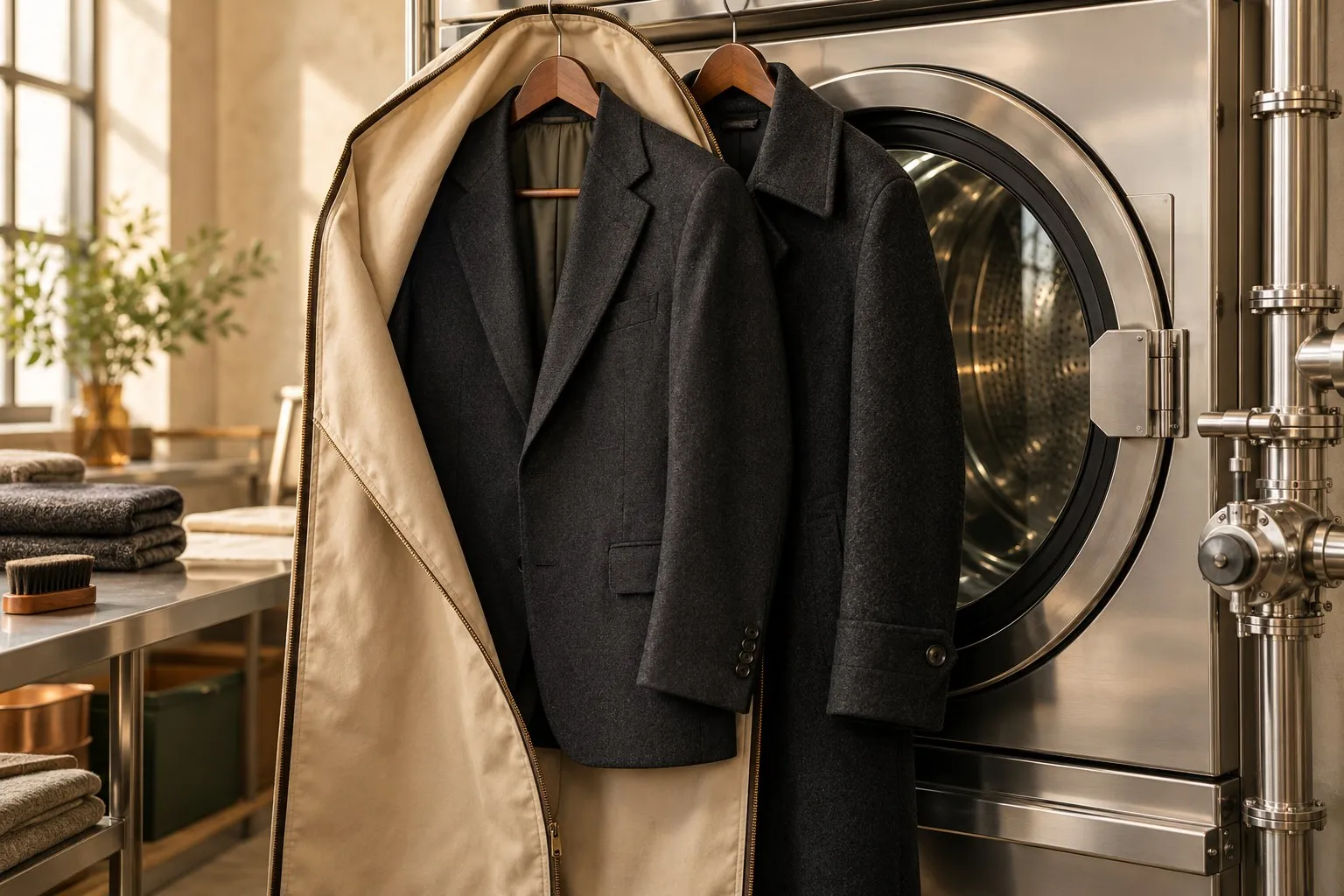
The collar, cuffs and pocket edges soil the most, so we work them by hand first. The garment is then cleaned in a Realstar SYSTEMK4 closed-circuit machine with gentle mechanical action and a hide-safe solvent, while delicate fur and faux pile go through the wet-cleaning line at low temperature.
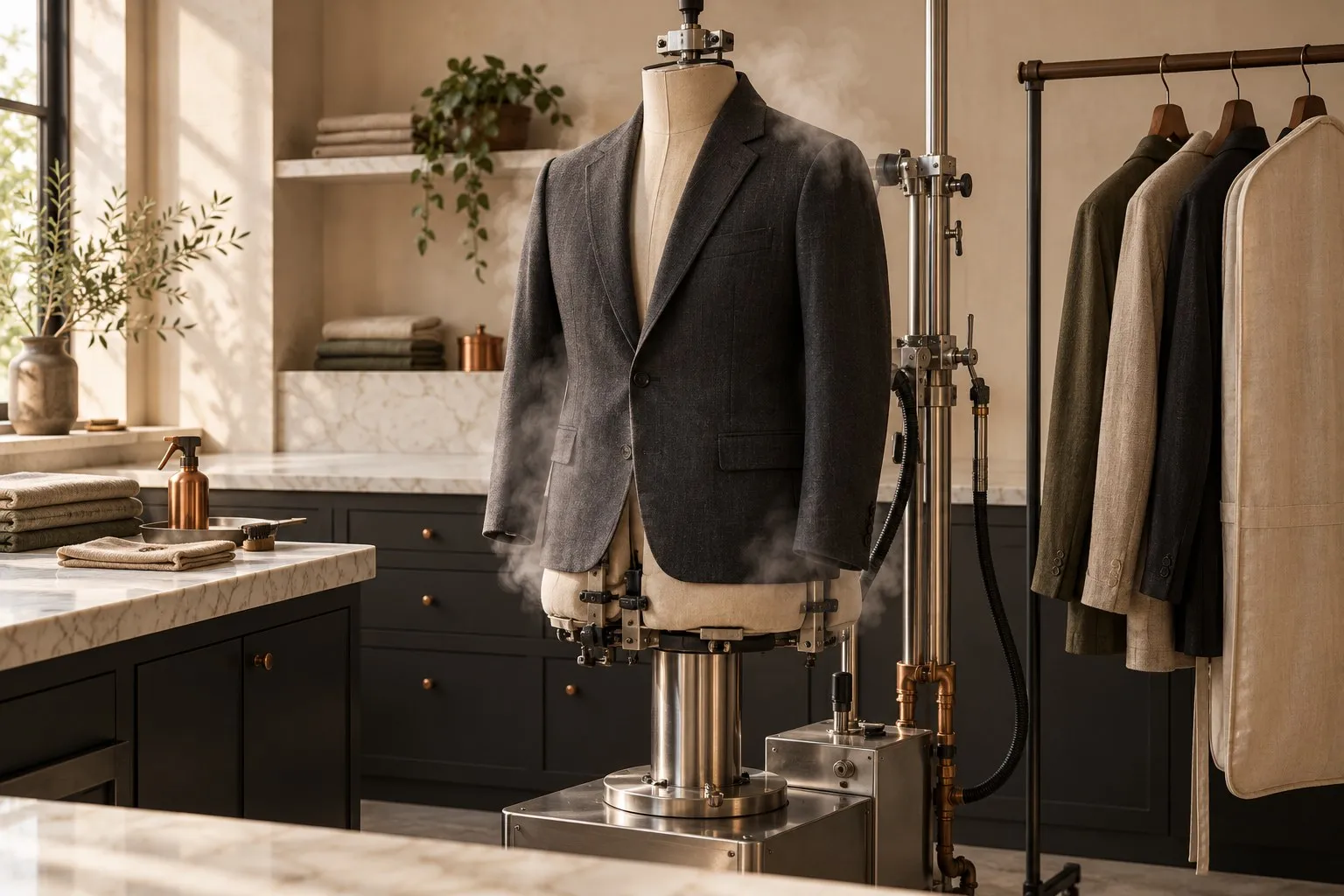
Cleaning also strips oil from the hide, so we treat it with a softening, re-fatting product — skip that step and the leather goes stiff and cracks. We then dry the garment at a controlled temperature on a form, comb the pile back up and return it in a breathable cover.
No. Water strips the oil from the hide; as it dries the leather tightens, stiffens and the garment shrinks — and that cannot be reversed. The leather face and the wool lining also react to water differently, so we split the work and treat each material separately.
No — lifting the pile is part of the job: drying is done at a controlled temperature, then the pile is combed and raised along its direction. If the hairs are broken at the root or the matting is permanent, full recovery is not possible, and we say so at intake.
Faux fur never goes on the same programme as natural fur. Its fibre melts and mats with heat, and that is irreversible, so we clean it at low temperature with gentle mechanical action and air-dry it on a form. Faux pile on collars and cuffs is treated separately.
Cleaning removes dirt but does not bring colour back. If the collar, cuffs or elbows show rub marks, or the overall tone has faded, dyeing is a separate job — see the Leather dyeing page. Cleaning and dyeing can go into one order; the sequence is cleaning first, dyeing after.
In sheepskin the smell usually collects in the lining and under the arms. We pre-treat those areas, after which cleaning and controlled drying remove the source. Any moisture left behind brings the smell back, so we never cut the drying stage short.
Sheepskin and fur take longer than ordinary garments: the work runs in stages, and re-fatting the hide plus controlled drying both need time. The time depends on the garment type, its length and any extra work (dyeing, tailoring); we give a ready date at intake and let you know when it is done — you can also follow the order on the Track order page.
All four branches accept these garments: 28 May (Kövkəb Səfərəliyeva 19A), Nərimanov (Əlicabbar Orucəliyev 126), Ağ Şəhər (Süleyman Vəzirov 28c/1) and Elmlər (Fətəli Xan Xoyski 14). 28 May, Nərimanov and Elmlər open Mon-Sat 10:00-19:00 and Sunday 12:00-18:00; Ağ Şəhər opens daily 10:00-22:00. If carrying a long coat or fur in is inconvenient, our courier collects and returns it — *3338 or +994 55 433 33 38.
Cleaning and colour restoration
We restore the colour of faded leather.
We clean suits and delicate garments.